
 Facebook
 X
X
 Pinterest
 Copy Link
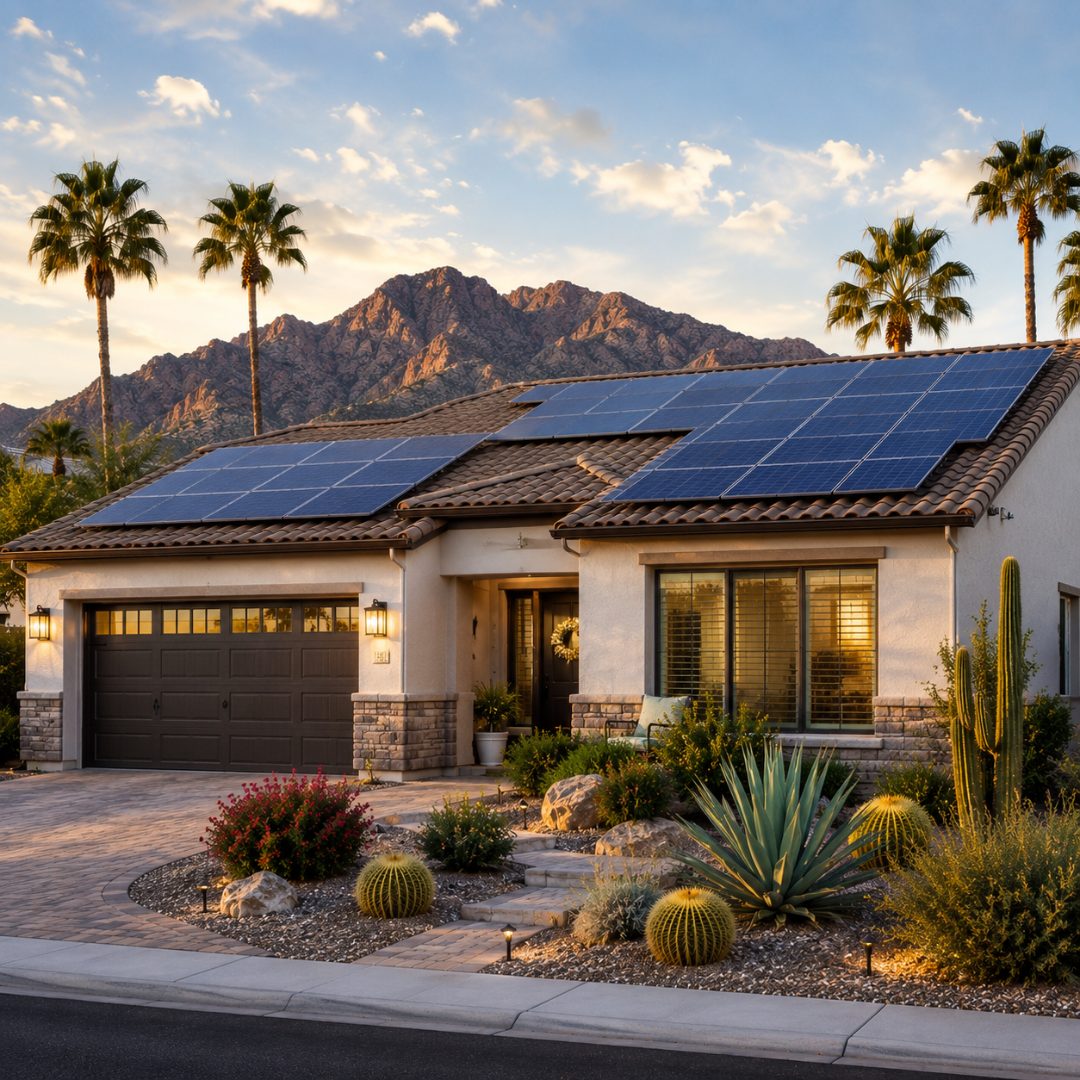
As solar energy becomes more common across Arizona, home buyers are increasingly encountering properties with solar panels already installed. While solar can offer lower utility bills and long-term savings, not all solar systems are created equally. One of the most important questions to ask when considering a home with solar is whether the system is owned or leased. The answer can affect your monthly expenses, financing, future resale value, and overall homeownership experience. Before you make an offer, here’s what you should know about buying a home with owned versus leased solar panels.
Buying a Home with Owned Solar Panels
In an owned solar arrangement, the seller either purchased the system outright or has paid off a solar loan. Ownership transfers to the buyer as part of the home sale.
Advantages of Owned Solar
- Lower Utility Bills Without Additional Payments – One of the biggest benefits of owned solar is the opportunity to enjoy reduced electricity costs without taking on a separate lease payment. The energy generated by the system can help offset Arizona’s high summer cooling costs.
- Potentially Greater Home Value – Many buyers view owned solar as a valuable feature, depending on the system’s age and roof condition. Unlike a lease, there is no separate contract to assume.
- Simpler Real Estate Transaction – Owned solar generally creates fewer hurdles during escrow. Buyers don’t need approval from a solar company.
- Long-Term Savings – If the system is relatively new and properly sized, buyers may benefit from years of reduced energy expenses.
Potential Drawbacks of Owned Solar
- Age and Condition Matter – Not all solar systems offer the same value. Buyers should ask about the installation date, remaining warranty coverage, maintenance history, and expected lifespan of key components like the inverter.
- Future Repair Costs – Once warranties expire, the homeowner becomes responsible for maintenance and repairs.
- Equipment Purchased to Meet Their Needs, Not Yours – A solar system that worked well for the seller may not fully offset the energy usage of a new household, especially if occupancy and usage differ. For example, the original owners purchased a system for two adults working outside the home; usage for a family of five with parents working from home and three teenagers is likely to be much higher.
Buying a Home with Leased Solar Panels
With leased solar, the solar company retains ownership of the equipment. The buyer must typically assume the existing lease agreement as part of the purchase.
Advantages of Leased Solar
- Lower Utility Bills from Day One – Many leased systems still provide energy savings compared to relying entirely on the utility company.
- Limited Maintenance Responsibility – Since the solar company owns the equipment, maintenance and repairs are often covered under the lease agreement.
- No Large Upfront Investment – The original homeowner paid little or nothing to install the system, which means buyers can benefit from solar generation without having paid for installation costs.
Potential Drawbacks of Leased Solar
- Lease Assumption Requirements – Most solar companies require buyers to qualify for and assume the lease before closing. This process can involve credit approval and additional paperwork.
- Monthly Lease Payments – Unlike owned solar, leased systems typically come with ongoing monthly payments that transfer to the buyer.
- Escalation Clauses – Some solar leases have escalating payments so lease costs increase annually, while the energy produced goes down. Other leases can be flat.
- Potential Financing Challenges – Certain buyers may be hesitant to assume a long-term lease obligation or may not qualify for the lease assumption.
- Does Not Add Value – appraisers do not recognized leased solar as adding value to a property because it is not owned.
- Can Affect a Home’s Marketability – for the above reasons, homes with leased solar can take longer to sell.
Questions Every Buyer Should Ask
Whether the solar system is owned or leased, buyers should gather as much information as possible before closing. Consider asking:
- Is the solar system owned, financed, or leased?
- When was the system installed?
- What is the average monthly electric bill?
- Are warranties transferable?
- Has the system required repairs?
- Are there monitoring reports showing production history?
- If leased, what are the monthly payments and remaining contract term?
- If leased, what happens with the system at the end of the lease?
- Does the lease contain annual payment increases?
- Was the roof replaced before the solar system was added?
- What is the condition of the roof the solar panels are installed on?
- Who would be responsible for removing and reinstalling the panels if the roof needs replacement?
Real Estate Perspective
When helping buyers evaluate homes with solar in the Phoenix and Scottsdale area, I encourage them to look beyond the promise of lower electric bills. The best solar-equipped homes typically have:
- An owned solar system
- Transferable warranties
- Documented production history
- A roof in good condition with substantial remaining life
- Clear records regarding maintenance and repairs
A solar system can be a tremendous asset, but only when buyers understand the complete picture—including the roof underneath it.
Final Thoughts
For most Arizona home buyers, owned solar is typically the more desirable option because it often provides lower long-term energy costs, fewer transaction hurdles, and greater resale appeal. Leased solar can still offer savings, but buyers should carefully review the lease agreement, transfer requirements, monthly payments, roof condition, and any potential fees before moving forward.
| Category | Owned Solar | Leased Solar |
| Simplicity of Purchase | ⭐⭐⭐⭐⭐ | ⭐⭐⭐ |
| Predictability of Monthly Costs | ⭐⭐⭐⭐ | ⭐⭐ |
| Long-Term Financial Benefit | ⭐⭐⭐⭐⭐ | ⭐⭐ |
| Flexibility | ⭐⭐⭐⭐⭐ | ⭐⭐ |
| Ease of Future Resale | ⭐⭐⭐⭐⭐ | ⭐⭐⭐ |
| Likelihood of Additional Fees | ⭐⭐⭐⭐⭐ | ⭐⭐ |
| Overall Buyer Appeal | ⭐⭐⭐⭐⭐ | ⭐⭐⭐ |
Note: Every solar system is different. Buyers should review the solar agreement, production history, warranties, roof condition, and recent utility bills before making a purchasing decision. A leased solar system may still be an excellent value if the terms are favorable and the energy savings outweigh the lease costs. This article was written with the assistnace of AI.
